XR Production · Real Serious Games · 2021–2022
Six full-motion VR training units deployed at one of Australia's largest mining operations, built across three countries.
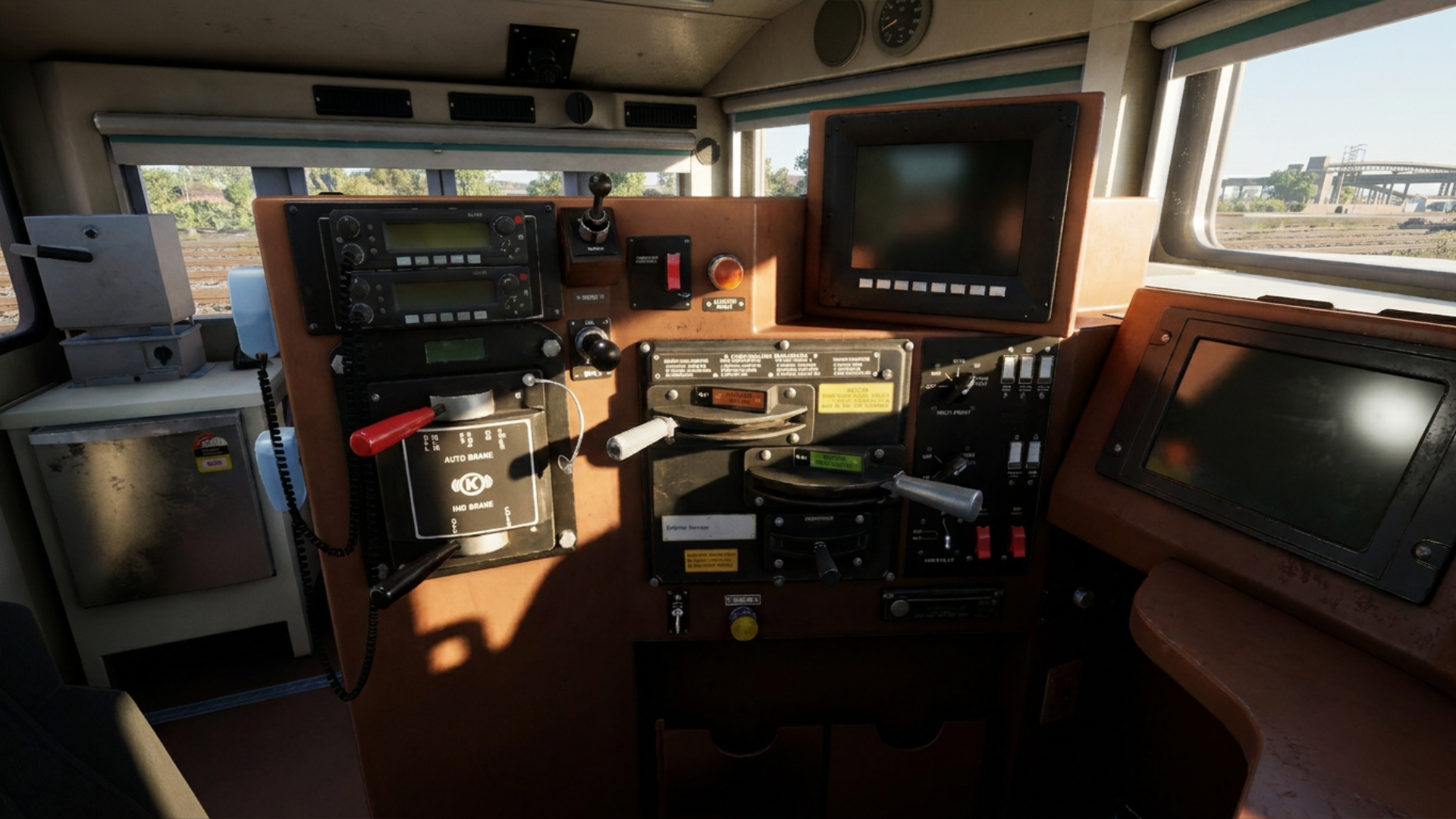
A major Australian mining company needed a VR training simulator for their yard operations at Port Hedland — one of the world's largest iron ore export facilities. The training requirement spanned both mining and rail operations, covering the equipment, procedures, and spatial logic of a working yard that you can't easily stop for training purposes. Six full-motion simulator units would be the final deployment.
As Senior XR Producer at Real Serious Games, I owned the end-to-end delivery: from the initial Knowledge Transfer sessions through design, approval, development, UAT, and final handover.
The project was distributed across three locations: development teams in Western Australia and New South Wales, with a third team in Hong Kong. Each team had its own working rhythms, communication styles, and technical dependencies. Keeping all three aligned — and keeping the client informed without overwhelming them — was as much a production challenge as a technical one.
The stakeholder pipeline was unusually complex for a project of this type. The client is a large organisation with multiple business units, each with their own approvals process. I mapped those dependencies early and built them into the delivery schedule, which meant we weren't waiting on sign-offs we hadn't anticipated.
The most important validation came when we got real-world train drivers into the simulator before launch. These are people who drive trains for a living — they know immediately when something doesn't feel right. I facilitated those testing sessions, and the feedback shaped the final calibration of the experience: the weight of controls, the timing of signals, the spatial cues that tell a driver where they are in the yard.
There's no substitute for that kind of subject matter expertise, and there's no shortcut to earning it. Getting the drivers into the room early, listening carefully, and acting on what they said was one of the better decisions we made on the project.
The simulator delivered on time and to brief. Six full-motion units were deployed at Port Hedland and are used as part of ongoing training for operations staff. The production discipline we built into the process — the structured KT sessions, the mapped approval dependencies, the real-driver validation — is the kind of thing that doesn't show in the final product but makes the final product possible.